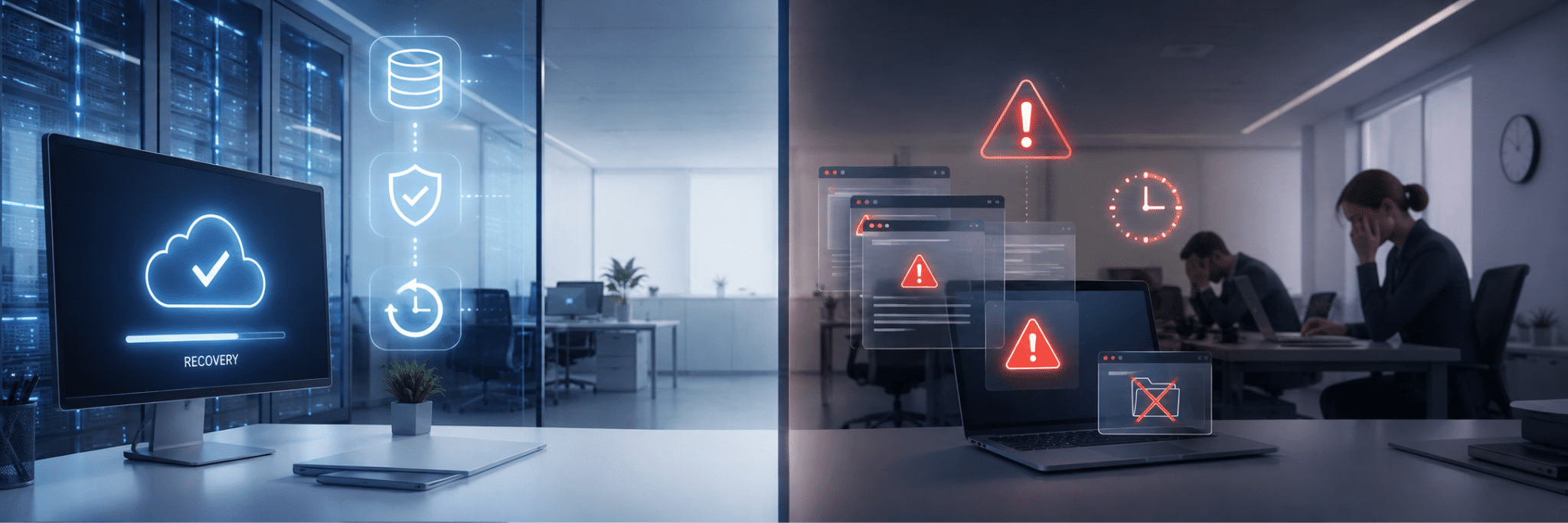
Many organizations invest in threat intelligence platforms designed to collect and analyze threat data. But broad data, shallow integration, and disconnected workflows often prevent that intelligence from ever translating into action.
Customer data is the engine behind better products, sharper marketing, and stronger business decisions. But how a business collects and protects that data has become as important as the data itself. Privacy regulations are tightening, customers are paying closer attention, and the consequences of getting it wrong have never been more significant.
Your company network infrastructure is the foundation that keeps devices, applications, users, cloud tools, and locations connected. It includes your switches, routers, firewalls, access points, cabling, servers, internet connections, remote access tools, and the policies that control how everything communicates.
Most cybersecurity tools are built around a simple assumption: malicious software leaves files behind. Fileless malware is designed specifically to defeat that assumption. Rather than dropping a suspicious executable onto a hard drive, it operates entirely in memory, using your system’s own trusted tools against you, and leaving little to nothing for a traditional antivirus scanner to find.
When office Wi-Fi keeps dropping, the issue is rarely one random glitch. It’s usually a sign that your wireless network is overloaded, poorly placed, misconfigured, outdated, or not built for the way your team works today.
Before you replace equipment or upgrade your internet plan, it pays to understand what’s actually causing the drops.
The same Voice over Internet Protocol (VoIP) infrastructure your business relies on for day-to-day communication is quietly generating a wealth of data about how your teams operate and how your customers feel. VoIP analytics is the layer that makes that data readable, searchable, and useful for everyone from IT managers to contact center supervisors.