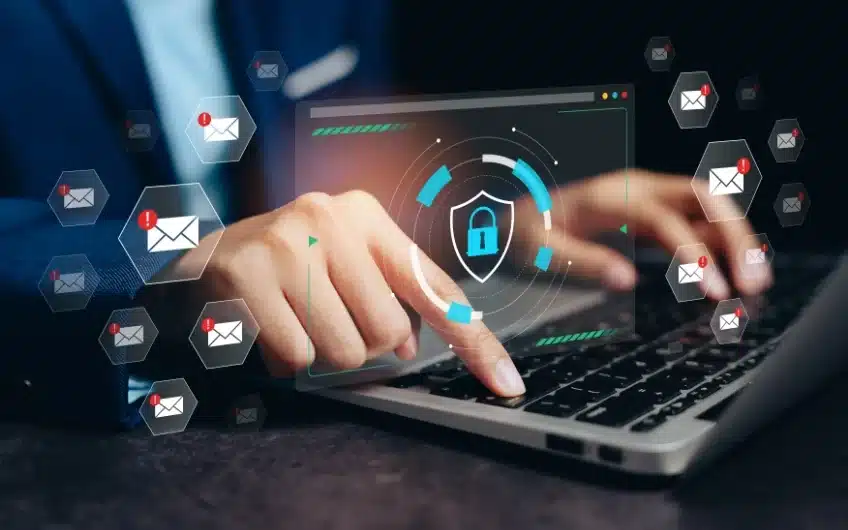
Imagine this: a single employee clicks a seemingly harmless link in an email, and suddenly, sensitive client data is exposed. For many small and medium-sized businesses (SMBs), this scenario is far from hypothetical. Email remains the primary gateway for cyberattacks, and SMBs are particularly vulnerable because their security measures and resources are often limited. That’s why understanding how to protect your email system is essential for keeping your business running safely.
Why SMBs are at risk
For SMBs, email is more than just a communication tool. It’s often a repository for contracts, invoices, client information, financial records, and other sensitive data. These valuable assets make SMBs attractive targets for cybercriminals, especially as attackers increasingly use spam and deceptive messages to slip past limited defenses.
When a breach does occur, the consequences can be severe. Recovering from a serious attack can disrupt operations, damage reputations, and in some cases, threaten the survival of the business.
Part of the risk comes down to resources. While large enterprises usually have dedicated IT teams, SMBs often rely on a handful of IT staff or outside contractors. That can mean fewer security checks, slower response times, and a higher chance that a single suspicious email or piece of spam spirals into a major incident.
Common email threats facing SMBs
Emails may look harmless, but danger can lurk behind every click. Attackers are constantly finding ways to disguise harmful messages as legitimate ones. Here are the types of email attacks businesses face most often:
- Phishing and spear phishing: Attackers may send emails that are carefully disguised to appear as though they come from trusted contacts (i.e., vendors, clients, or even team members) so recipients are more likely to trust them.
- Spoofing and business email compromise: Cybercriminals often impersonate trusted contacts, including vendors or internal staff, by forging “From” addresses. These deceptive emails can convince employees to share sensitive data or approve payments without realizing the risk.
- Malicious attachments and harmful links: Hidden malware in attachments or disguised links continue to be a common method used by attackers. A single accidental click can put your entire system at risk.
Because of these risks, relying on basic email platforms alone isn’t enough. Without dedicated defenses, even small oversights, such as accidentally replying to a fraudulent email, can lead to major fallout.
What every small business should do
Avoid being blindsided by email threats. These practical steps can help protect your business and your data:
Invest in advanced email and spam protection
Email platforms come with built-in spam protection, but it’s not designed to stop modern attacks. Advanced email and spam filters go beyond basic protection, scanning content, analyzing sender identity, and blocking dangerous links and attachments before they reach your staff.
Encrypt sensitive messages
Whenever you’re sending financial details, client data, or confidential documents, encryption should be a default, not an afterthought. With encryption, even intercepted messages remain secure, as the information is scrambled and meaningless to anyone without the key.
Enable multifactor authentication (MFA) and strong passwords
Passwords alone can’t keep accounts fully secure. By combining strong, unique passwords with MFA — such as a code sent to your phone or an authentication app — you dramatically lower the risk of unauthorized access.
Prioritize employee training
No matter how robust your technical setup is, it won’t help if employees don’t know what to watch for. Regular email security training teaches them to identify phishing emails, harmful attachments, and social engineering schemes, turning awareness into a key defense against attacks.
Establish internal protocols for sensitive requests
If someone sends an email requesting a payment or sensitive information, especially if it seems urgent, make it company policy to verify through another channel (phone call, in-person check, etc.) before complying. This simple step can stop scams that rely on pressure or urgency.
Secure your inbox, secure your business
Email is the central nervous system of any small business, so it deserves serious protection. The good news? You don’t have to blow your budget to put a strong defense in place.
Start with a layered approach: secure your email system, enforce email security best practices, and train your team. By doing this, you’ll remain one step ahead of email threats.
With the right tools in place, protecting your SMB is easier than you might think. Explore USWired’s email security solutions to safeguard your business without breaking the bank. Reach out to us today.